New: Accessible Photovoice Toolkit

Introducing the Feeling at Home Accessible Photovoice Toolkit

This toolkit has been developed by the Feeling at Home team to support other groups who want to use the photovoice method in their own projects. Photovoice is a participatory approach that combines photography and discussion, enabling people to share experiences and perspectives in accessible and engaging ways.

The toolkit is made up of 9 videos giving clear, step by step videos on planning and running photovoice sessions. We give practical tips for facilitating inclusive conversations about your chosen topic. It also includes templates and resources to help you set up your project.

It is designed to be flexible, so that community groups, researchers, and organisations can apply photovoice to a wide range of topics. Our aim is to make the method easier to use, so more perspectives can be heard.

We are always happy to get feedback about our resources to make them better for different audiences. Feel free to get in touch with any ideas.

Introduction to photovoice – video


Stage 1: Finding your audience – video

Stage 1 Letter to councillor – MS Word


Stage 2: Getting started – video

Stage 2 Photovoice flyer – MS PowerPoint

Stage 2 Children and young people participant consent form – MS Word

Stage 2 Leaflet template – MS Word

Stage 2 Letter requesting charity support – MS Word


Stage 3: Getting started – video


Stage 4: Consent and ethics – video

Stage 4 Release form – MS Word

Stage 4 Participation consent form – MS Word

Stage 4 Subject consent form – MS Word

Stage 4 Easy Read participation form – MS PowerPoint


Stage 5: Picking a theme – video

Stage 5 Leaflet template – MS PowerPoint


Stage 6: Taking the photos – video

We have also made an Easy Read guide to using a camera.


Stage 7: Talking about the photos – video


Stage 8: Showcasing the photos – video

New article: Involving experts by experience in inspection and regulation

We have a new article published in the journal, Health & Social Care in the Community:

Involvement of Lay Assessors in the Inspection and Regulation of Public Services: A Systematic Review

Full reference:

Chinn, D., Brickley, K., & Power, A. (2024). Involvement of Lay Assessors in the Inspection and Regulation of Public Services: A Systematic Review. Health & Social Care in the Community, 2024, 1282674, 22 pages, 2024https://doi.org/10.1155/2024/1282674

We would love to know what you think!

Get in touch if you have any comments or feedback.

graphic of a brown house with a heart shaped door, next to an orange house with 2 windows.

New article: What does ‘feeling at home’ mean?

We are delighted to share a new article from the Feeling at Home team, published in the Journal of Applied Research in Intellectual Disabilities:


What does ‘feeling at home’ mean for adults with intellectual disabilities living in group homes in England?


We would love to know what you think! Get in touch if you have any comments or feedback.


Full reference:

Chinn, D., Levitan, T., Power, A., Brickley, K., & Ali, S. (2024). What does ‘feeling at home’ mean for adults with intellectual disabilities living in group homes in England? Journal of Applied Research in Intellectual Disabilities, 37(5), e13274. https://doi.org/10.1111/jar.13274

Section 1 Making decisions Section 2 Bedroom Section 3 Shared spaces Section 4 Garden Section 5 Cooking and cleaning Section 6 Getting on together Section 7 Community

Feeling at Home toolkit – by section

Getting to the section you need quickly!


We know there’s a lot of information in our toolkit, so we have made a separate PDF of each section which you can look at one by one.


You can download each section of the Feeling at Home toolkit here:

01 Feeling at Home Toolkit Section 1 Making a decision

02 Feeling at Home Toolkit Section 2 Bedroom

03 Feeling at Home Toolkit Section 3 Shared Spaces

04 Feeling at Home Toolkit Section 4 Garden

05 Feeling at Home Toolkit Section 5 Cooking and cleaning

06 Feeling at Home Toolkit Section 6 Getting on together

07 Planning Sheet


Please note, the Planning Sheet is editable, so you can type your answers and save on your computer.


You can also download the full Feeling at Home toolkit, with additional introduction, as one document from the resources page.


We are always happy to get feedback on our toolkit – email Deborah Chinn on deborah.chinn@kcl.ac.uk

Feeling at Home toolkit

Feeling at Home toolkit

We are delighted to share our co-designed Feeling at Home toolkit!


You can download the full version of the Feeling at Home toolkit:

Feeling at Home Toolkit


For ease, we also share each section separately on our resources page.


We are always happy to get feedback on our toolkit – email Deborah Chinn on deborah.chinn@kcl.ac.uk

screenshot of cover of the feeling at home checklist with intro and guidance

Feeling at Home checklists

We are delighted to share our co-designed Feeling at Home checklists!

Please note, we have two versions:

One checklist for people living in group homes to complete themselves or with some support:

Feeling at Home checklist


And another checklist for supporters to use with people who would find it too difficult to communicate how they would like to answer the questions:

Feeling at Home checklist for supporters


The checklists are designed to be used alongside the Feeling at Home toolkit.

We are always happy to get feedback on our checklist – email Deborah Chinn on deborah.chinn@kcl.ac.uk

Lots of colourful post-it notes with handwritten comments, for example, Music! Snuggling on the couch, I like my home to be quiet. There are also some stickers mixed in with the post-it notes of things you might find around the home. For example, a bath tub, a sofa, some plants.

Infographic: what our exhibition visitors said helped them to feel at home

We asked visitors to our Feeling at Home exhibition at the Science Gallery London to tell us what helped them feel at home.

Have a look at our colourful infographic resource to find out what they thought: What Makes You Feel at Home- what our exhibition visitors think

At the exhibition, we asked visitors to write their thoughts on Post-it notes and stick them on a picture of a house on the gallery wall. Visitors could also use some stickers we produced especially for the exhibition of things people might find in a group home.

We noticed that some visitors to our exhibition also added their own ‘homely’ touch by yarn-bombing some crocheted hearts around the pillar next to our exhibition text:

A pillar next an exhibition display. Someone has added crocheted hearts around the pillar.


At the end of the month-long exhibition at Science Gallery London, we counted the different types of answers to learn what made our visitors feel most at home. There were…

  • 44 comments about entertainment
  • 8 comments about food and drink
  • 52 comments about loved ones
  • 34 comments about personal items
  • 25 comments about plants and nature
  • 14 comments about positive feelings
  • and 30 comments about pets!

Lots of colourful post-it notes with handwritten comments, for example, Music! Snuggling on the couch, I like my home to be quiet. There are also some stickers mixed in with the post-it notes of things you might find around the home. For example, a bath tub, a sofa, some plants.

Positive feelings’ reflect feelings such as safety, comfort, peace and quiet associated with home.

‘Personal items’ included furniture, toys, clothes and utensils.

Interestingly, entertainment – such as watching TV and playing games – was the second most common answer from visitors, after spending time with and being in the presence of loved ones.


For more information about our travelling exhibition, please visit the Feeling at Home events page.  Or you can see the images online by visiting our exhibition page.


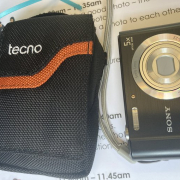
A camera and a camera case. The camera has been personalised with a sticker.

Photovoice resource: Easy Read guide to using the camera

In our photovoice groups, we produce a number of resources to help us explain our project, methods, and activities to group members. 

We found that producing this Easy Read style document about the cameras was really helpful. It reminded participants how to do certain things with the camera, and gave group leaders a simple resource to refer to, to support any verbal explanations.

Let us know what you think. Is there anything we could change?

Guide to using the camera – Easy Read

A camera and a camera case. The camera has been personalised with a sticker.

Involving service users in inspection and regulation, Dr Katy Brickley and Shalim Ali

At the Feeling at Home webinar on the 2nd November, research team members, Dr Katy Brickley and Shalim Ali, talked about how end users are involved in inspection and regulation.

You can read their presentation here:

Involving users in inspection and regulation

And watch a video of their talk on inspection and regulation on our Feeling at Home YouTube channel.

How is homeliness reflected in policy and guidance, Dr Deborah Chinn

At the Feeling at Home webinar on the 2nd November, Principal Investigator, Dr Deborah Chinn, discussed how ‘homeliness’ was reflected in policy and guidance.

You can read her slides here:

How is homeliness reflected in policy and guidance

And watch a video of Dr Chinn’s presentation here on our Feeling at Home YouTube channel.